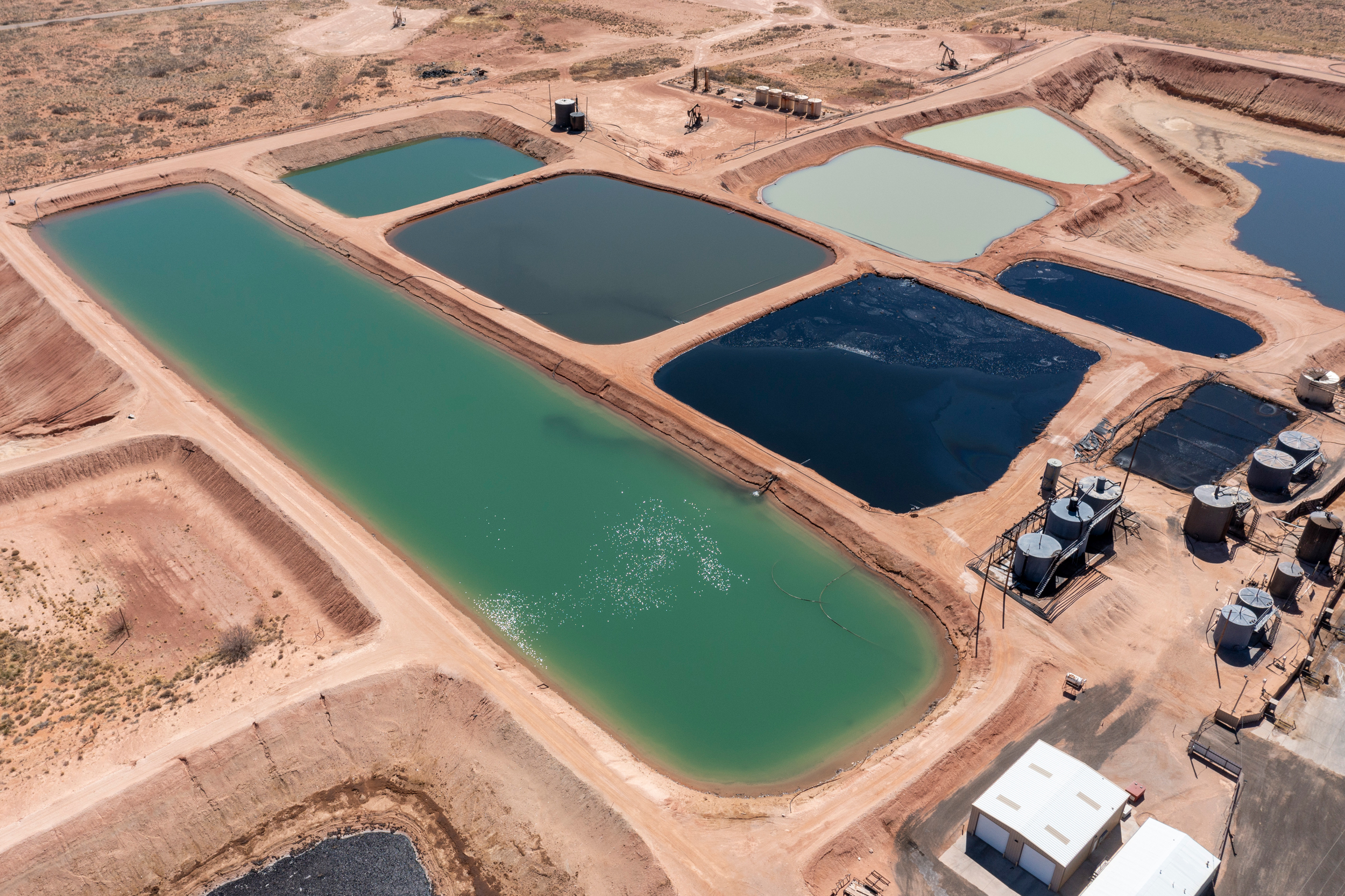
From Royalty Trust Era to Today's Water Crisis

Those of us who have worked Permian Basin acreage for decades still remember when royalty structures — like the historic Permian Basin Royalty Trust — dominated every conversation. In 2026, however, the dominant challenge for every operator has completely shifted: managing the enormous and still-growing volumes of produced water.

This is no longer a side issue. It is a multi-billion-dollar operational reality reshaping budgets, infrastructure, and long-term planning across the Delaware and Midland sub-basins.

<!-- Image suggestion: Infographic showing YoY produced water volume growth 2018-2026 (Delaware vs Midland split) -->

The Numbers Don't Lie — Volumes Keep Surging

According to the latest TRRC filings and basin-wide monitoring data, Permian produced water volumes crossed 10.5 million barrels per day (BPD) in early 2026 — equating to over 3.8 billion barrels annually.

Water-to-oil ratios (WOR) in mature unconventional wells now routinely hit 6:1 to 12:1, with some Delaware Basin laterals exceeding 15:1. The EIA projects basin-wide volumes will reach 13 million BPD by 2028.

Delaware vs Midland: Very Different Water Challenges

ParameterDelaware Basin (avg.)Midland Basin (avg.)Typical Reuse Threshold
Total Dissolved Solids180,000 – 260,000 mg/L80,000 – 150,000 mg/L< 50,000 mg/L
Chloride95,000 – 140,000 mg/L45,000 – 85,000 mg/L< 250 mg/L
Total Suspended Solids300 – 1,200 mg/L150 – 600 mg/L< 30 mg/L
Barium + Strontium500 – 4,000 mg/L200 – 1,500 mg/L< 2 mg/L
Estimated Daily Volume (2026)~6.2 million BPD~4.3 million BPD

The ultra-high-TDS water in the Delaware Basin creates treatment headaches that conventional methods simply cannot handle anymore.

Fracking Flowback: The High-Volume Spike

Early flowback from a new horizontal well can hit 30,000–60,000 barrels in the first 30 days. When operators run 8–16 wells on a single pad, the peak load becomes enormous. This water carries high fines, iron, NORM precursors, and residual frac chemicals that foul equipment fast.

The Real Cost Impact on Operators

Produced water handling now accounts for 18–31% of total LOE (up from 9% in 2018). At $0.35–$0.80 per barrel for disposal, the basin is spending $3.5–$8 million per day — before any treatment.

This is exactly why efficient chemical treatment has become a top capital priority.

The Path Forward: Polymer Chemistry Delivers Results

The most effective operators are turning to proven polymer technology. Cationic Polyacrylamide (CPAM) has become the cornerstone for high-TSS streams: it forms strong flocs in seconds, cuts settling time dramatically, and produces 40–65% less sludge volume.

For EOR reinjection, Anionic Polyacrylamide (APAM) provides both mobility control and clarification. Proper jar testing and dosage optimization can turn produced water from a costly liability into a reusable asset.

When CPAM is correctly applied in clarification and sludge dewatering stages, operators see immediate gains in capacity, lower disposal costs, and higher water reuse rates.

The 2026 Permian challenge is ultimately a chemistry and engineering problem. Operators who solve it with the right polymer systems will maintain the strongest margins in the basin.

Next article in this series: Evolution of Fracking Flowback Treatment in the Permian Basin <!-- seo-depth-expansion -->

Field Verification Worksheet

At the water hub, for Permian Basin Produced Water Volumes: The Growing Challenge in 2026, record the water source, sample time, barrels per day, temperature, pH, conductivity or TDS, total suspended solids, iron, oil and grease, and any upstream chemical change. Tie every sample to tank level, separator condition, filter differential pressure, and injection or reuse destination for this field review. For field operations, that context matters because two samples with similar turbidity can behave differently when salinity, oil droplets, oxidation state, or residence time changes.

Convert chemical use to a common basis before comparing results for this field review. Before procurement approval, state neat-product density, active content, dilution strength, calibrated pump output, and dose per treated barrel. Reconcile the calculation with tote drawdown over a known operating period for this field review. During source blending, a field recommendation for permian basin produced water volumes: the growing challenge in 2026 is not complete until the dose, water quality, sludge volume, filter response, and downstream operating effect can be reviewed on the same timeline.

Acceptance and Supply Gate

Define the pass condition before a full shipment is ordered for this field review. Before scale-up, the gate may include outlet TSS, filter run time, injection pressure, sludge-hauling volume, pump stability, or compatibility with downstream reuse chemicals. Run long enough to cover realistic flow and water-source changes, and preserve the blank or incumbent baseline for this field review. During verification, an isolated clear bottle is supporting evidence, not the commercial endpoint.

The supplier file for Permian Basin Produced Water Volumes: The Growing Challenge in 2026 should include batch identity, preparation instructions, storage limits, packaging, lead time, safety data, and a process for investigating a repeat-shipment change for this field review. At steady state, operations should also document stop criteria for oil carryover, H2S risk, off-spec water, failed containment, or feed-pump drift. These controls make the article's recommendation auditable by both field staff and procurement for this field review.