High-TDS produced water changes the behavior of polymer programs. In lower-salinity water, an anionic polyacrylamide trial may show a clear dose response quickly. In Permian Basin brines, dissolved salts, hardness, oil carryover, iron, fine clays, scale-forming species, and changing pH can narrow the useful treatment window.
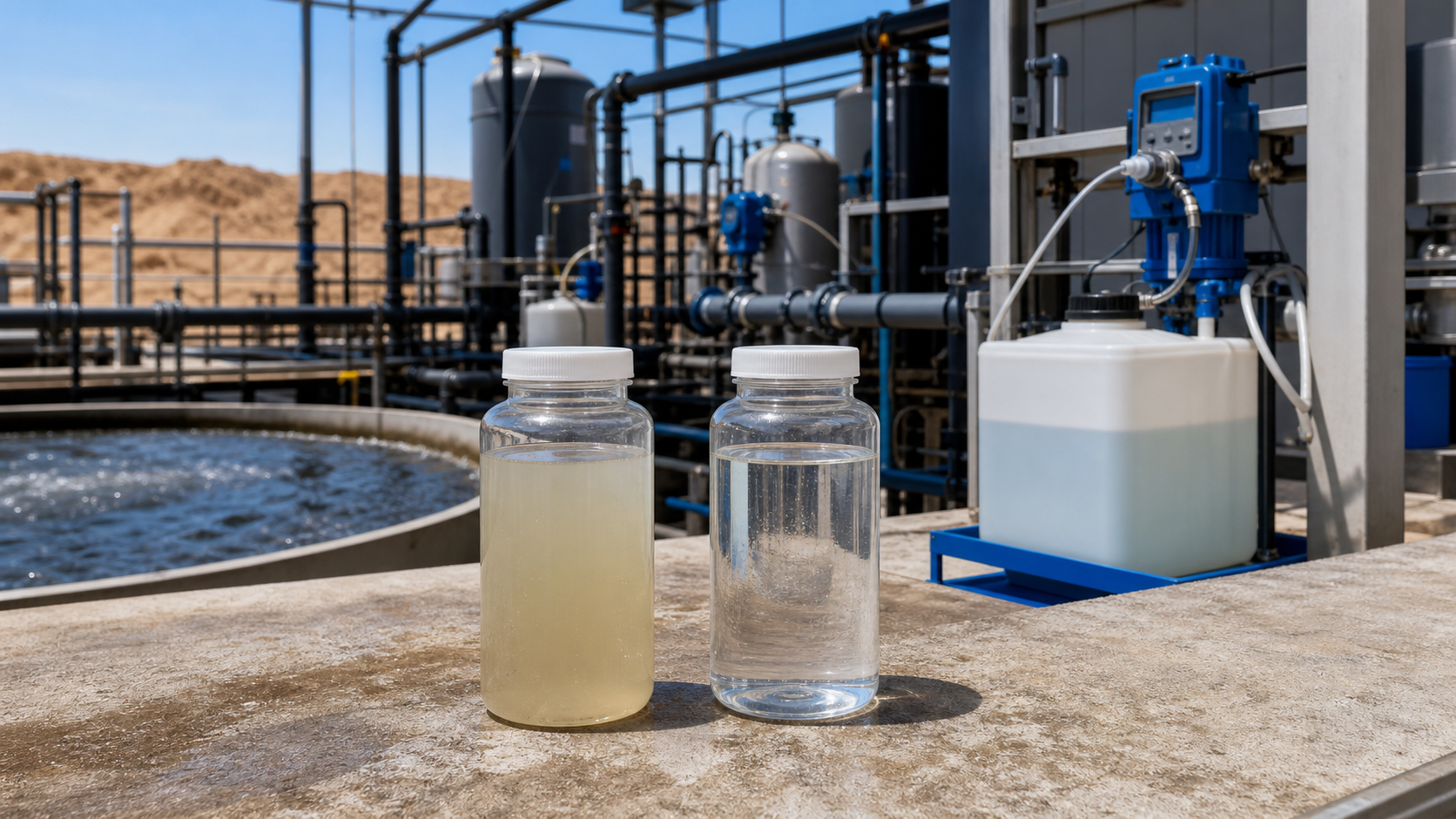
The result is that a product described as APAM can perform well in one field and fail in another. The difference may come from molecular weight, charge density, make-down quality, mixing energy, pretreatment chemistry, or the solids being removed. A field program should therefore be built around controlled testing rather than a catalog name.
For operators screening APAM grades, anionic polyacrylamide is the most relevant auxiliary reference, while the broader polyacrylamide manufacturer site should be used for product range, documentation, and sample coordination. The best supplier discussion starts with water chemistry and process constraints, not only with price per ton.
Define the Clarification Job
Produced water clarification can mean several different things. Some systems remove oil-associated suspended solids before filtration. Some prepare water for reuse. Some protect downstream injection equipment. Some support central treatment facilities that receive mixed streams from several leases. Each goal changes how polymer performance should be judged.
If the target is filtration protection, operators may focus on turbidity, particle size, and filter run length. If the target is reuse readiness, they may care about oil carryover, suspended solids, scale risk, and compatibility with downstream treatment. If the target is simple solids settling, they may care about sludge volume, settling speed, and supernatant clarity.
A trial without a defined job becomes subjective. One person may prefer fast floc formation, while another cares about final clarity after twenty minutes. The program should decide which signals matter before comparing products.
Build a Jar Test Matrix
A useful APAM jar test matrix compares several molecular weights and charge densities. It should also include a blank sample and, where relevant, a coagulant pre-step. High-TDS water sometimes needs destabilization before APAM can build strong floc. If a coagulant is used in the field, the jar test should include realistic coagulant dose and mixing sequence.
The test should imitate field mixing as closely as practical. Overly gentle handling can make fragile floc look acceptable. Excessive mixing can punish a product that would work under normal conditions. The best jar test watches the full sequence: polymer dispersion, initial floc formation, floc growth, settling, supernatant clarity, and floc strength after mild shear.
Do not choose the highest dose just because it creates the biggest floc. Overdose can create stringy appearance, floating solids, haze, or sludge that is hard to handle. A strong program identifies a dose window: underdose symptoms, normal dose, stress dose, and overdose symptoms.
Translate Bench Results to Field Dose
Scaling jar tests to field dose requires care. Lab polymer solution concentration may not match the field system. Aging time may differ. Produced water flow may fluctuate. Sample chemistry may change between collection and testing. These differences do not make jar testing useless, but they do mean the field trial must verify the result.
Start with a conservative dose range and change one variable at a time. Record water flow, polymer concentration, pump setting, injection point, visual clarity, settling behavior, and sludge volume. If the facility has online turbidity or suspended solids measurements, use them, but keep visual observations too. Field reality often appears first in the sample jar.
Supplier support matters here. A strong supplier should help interpret dose response and make-down conditions. Buyers comparing sources can review broader references such as polyacrylamide manufacturers when checking production capability, but the final choice should come from field data.
Keep the Program Flexible
Produced water is not steady. A facility may receive water from different wells, different stages of production, or different service operations. Storms, maintenance, tank cleaning, chemical carryover, and lease changes can shift chemistry. A fixed APAM dose may work for a week and then drift.
Operators should define an adjustment logic. If clarity worsens but floc remains strong, check loading and settling time. If floc is weak, check dose, make-down, and charge fit. If higher dose worsens clarity, suspect overdose or incompatible chemistry. If results change suddenly, inspect incoming water and polymer preparation before switching products.
The goal is not a dramatic chemical fix. The goal is a stable APAM program that produces consistent clarification at the lowest practical total cost per treated barrel. In high-TDS produced water, stability comes from testing, documentation, and disciplined field control.