Produced water teams usually do not buy polyacrylamide only on a product name. They buy a package of performance, sample support, logistics, and application knowledge. The polymer needs to match the water chemistry, the make-down equipment, the mixing energy, and the final separation goal.
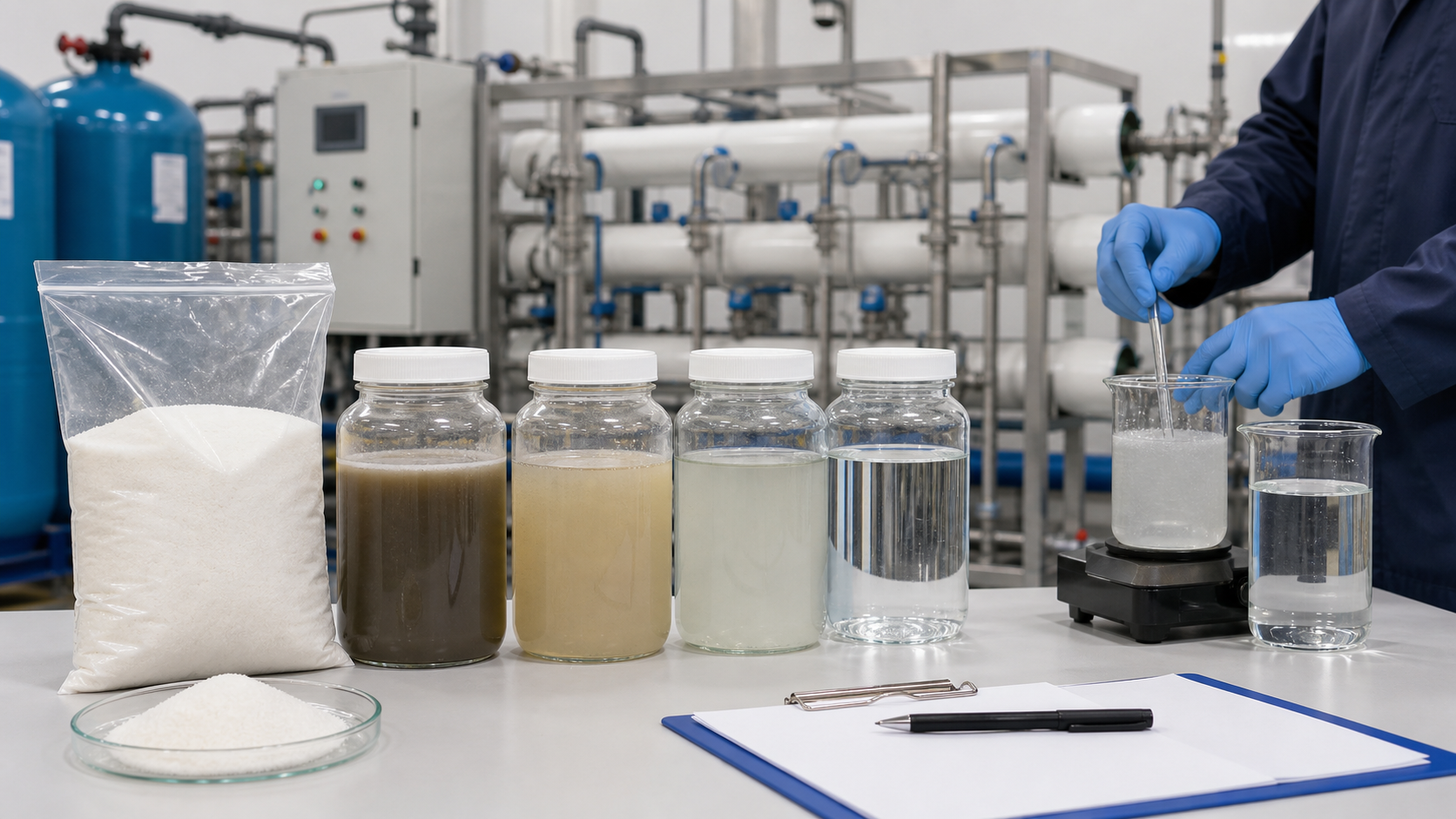
When comparing supplier options, start with process fit before price. A low-cost PAM that hydrates poorly, creates fisheyes, or loses performance under high salinity can raise total treatment cost through overdosing, poor sludge release, or inconsistent effluent clarity.
Supplier signals that matter
Reliable polymer supply is easier to judge when the supplier can explain the application rather than only quote a grade. For produced water clarification, ask whether they can support jar testing across variable TDS, oil carryover, and fine solids. For sludge dewatering, ask whether they can compare cake release, filtrate clarity, and polymer consumption on the same feed sample.
Useful supplier reference points include a focused polyacrylamide supplier, a broader polyacrylamide supplier information source, and the main factory site for Xinqi Polymer. These links are most useful when read alongside actual jar test data, not as a substitute for testing.
What to ask before placing an order
Ask for ionic type, molecular weight range, charge density, recommended dissolution concentration, aging time, and expected shelf-life. For field work, the polymer should also match the make-down water quality and available maturation time. A good supplier will ask about those details before recommending a product.
Keep a fallback grade
Produced water changes quickly during drilling, completion, and production phases. Keep one primary grade and one backup grade in the trial plan. The backup does not need to be the cheapest option. It needs to protect the operation when salinity, oil carryover, or solids loading shifts outside the normal range.
The best purchasing decision is not always the strongest single jar. It is the supplier and grade combination that stays predictable when field water is no longer behaving politely.
For the purchasing stage, see Dual-Source Oilfield PAM: Approve a Backup Without Mixing Grades for the corresponding supplier evidence and acceptance decision.