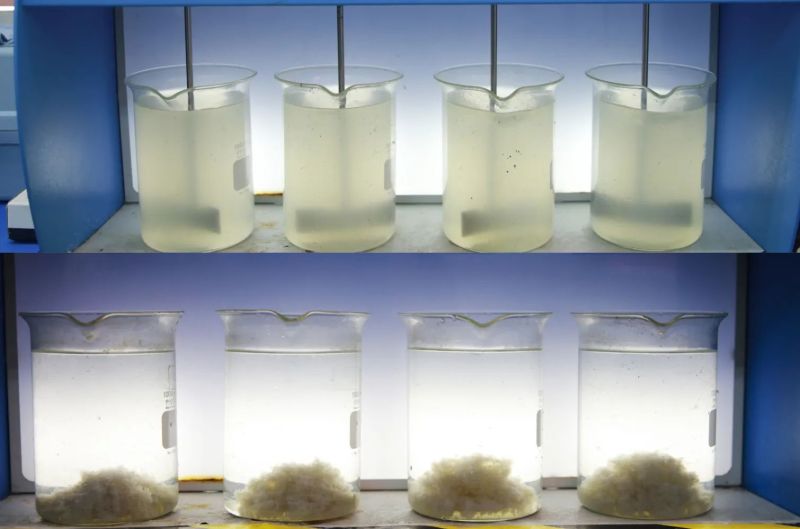
Buying PAM for clarification ahead of a ceramic membrane requires coordination with the membrane supplier. Improved settling does not by itself establish an acceptable membrane feed. Residual polymer, oil and colloidal material can change fouling and cleaning behavior, and those effects may not be visible in a short jar test. The procurement specification should include the downstream unit rather than stopping at the clarifier outlet.
Obtain the membrane operating limits
Identify membrane material, configuration, feed specifications, normal flux, cleaning procedure and any restrictions on upstream chemicals. Ask the membrane provider to review proposed polymer products before a plant trial. A generic description such as ceramic or chemical-resistant is not approval for every formulation and dose. Keep that review linked to the exact commercial grade.
Describe where polymer is added, the separation step that follows and the travel time to the membrane. If there is no effective solids-removal stage between dosing and filtration, the supplier needs to know. More polymer should not be used to compensate for a missing process step without an engineering review.
Test a realistic membrane feed
Use water leaving the proposed clarification process, not only a carefully decanted laboratory supernatant. Compare the existing pretreatment and candidate conditions for flux stability, pressure behavior, filtrate quality and cleaning recovery using a suitable test setup. Agree the trial length with the responsible specialists. A short run can miss accumulating deposits or slowly changing resistance.
The Xinqi PAM range provides a starting point for grade enquiries, while polyacrylamide supplier references can help specify the documentation package. Neither replaces membrane-provider acceptance or site pilot evidence.
Record carryover and overfeed response
Choose a suitable residual-polymer assessment with the laboratory where needed. Do not treat a single conductivity or turbidity reading as a direct polymer measurement. Include a controlled assessment of foreseeable dosing variation within approved safety and operating limits. Ask what operational signal would trigger a dose reduction or diversion before membrane performance is affected.
Tie purchase approval to the whole train
Specify an accepted dose range, preparation method, separation performance and membrane outcome. Add a requirement to review product changes with both suppliers. Include the cost of any additional monitoring or pretreatment equipment in the decision. The best quotation is the one supported by a workable integrated process, not necessarily the polymer that gives the lowest turbidity immediately after a jar test.
Technical checks before the order
Use the existing Produced Water Reuse Filtration Pretreatment: Polymer Clarification Window guidance to assemble the operating data for this purchase. Include the accepted trial conditions and unresolved questions in your product enquiry, so the proposed supply can be reviewed against the actual facility requirements.