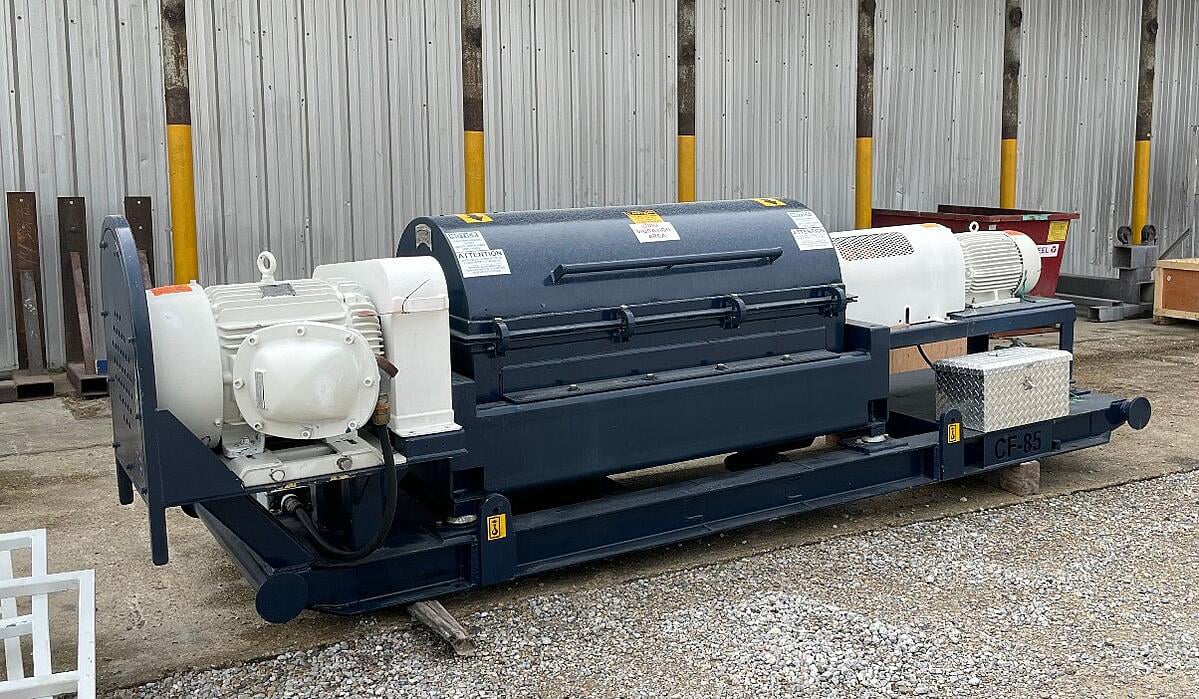
A PAM tender for a produced-water sludge centrifuge should evaluate the combined machine and chemical result. Cake dryness is important, but a dry cake obtained at reduced throughput or poor solids capture may not meet the facility's needs. Buyers should give bidders an operating envelope and a common evaluation procedure rather than inviting unsupported performance guarantees.
Define the sludge and machine conditions
Provide feed solids, variability, oil content where known, temperature, current polymer use and the centrifuge's normal operating range. Identify the conditioning point and available contact time. Record the settings used for the baseline, including feed rate and relevant speed or torque information. Equipment adjustments must be controlled so that a polymer comparison does not become a comparison of unrelated machine settings.
Request sample testing to select a shortlist, then plan a monitored machine trial. Bench filterability or settling can guide screening but cannot duplicate every centrifuge shear and separation condition. Ask bidders to identify what assumptions they are making about full-scale operation.
Agree simultaneous acceptance criteria
Evaluate cake solids, centrate solids, capture, stable throughput and commercial-polymer consumption over the same period. Record solids inventory changes so that a temporary accumulation is not mistaken for improved capture. If dry-solids loading changes, normalize the polymer record accordingly. Avoid comparing kilograms per hour across feeds with very different solids content.
Request suitable candidates from Xinqi Polymer, using cationic PAM as a potential screening family where sludge behavior supports it. Do not select charge density purely from a generic description of oilfield sludge.
Capture operating practicality
Log preparation time, solution stability, pump range, cleaning needs and operator interventions. A product that requires frequent manual correction may be difficult to maintain across shifts. Ask whether the proposed grade fits the existing make-down capacity at peak solids loading, not just at the trial's average throughput. Include packaging and unloading constraints in the commercial response.
Make the tender outcome reproducible
Attach raw measurements, sample times, machine settings and dose basis to the evaluation. Explain how the successful bidder is selected when one product gives drier cake but another gives better throughput. A weighted decision can be useful if the weights are agreed before results are known. Keep the approved grade code, trial batch and initial commercial delivery linked so that subsequent supply can be checked against the conditions that actually earned acceptance.
Technical checks before the order
Use the existing CPAM for Sludge Dewatering: Filter Press and Centrifuge Notes for Permian Basin Operators guidance to assemble the operating data for this purchase. Include the accepted trial conditions and unresolved questions in your product enquiry, so the proposed supply can be reviewed against the actual facility requirements.